Carbon Moto USA / Rider support
Best BMW R 1300 GS Performance Accessories for 2026: The Definitive Roundup

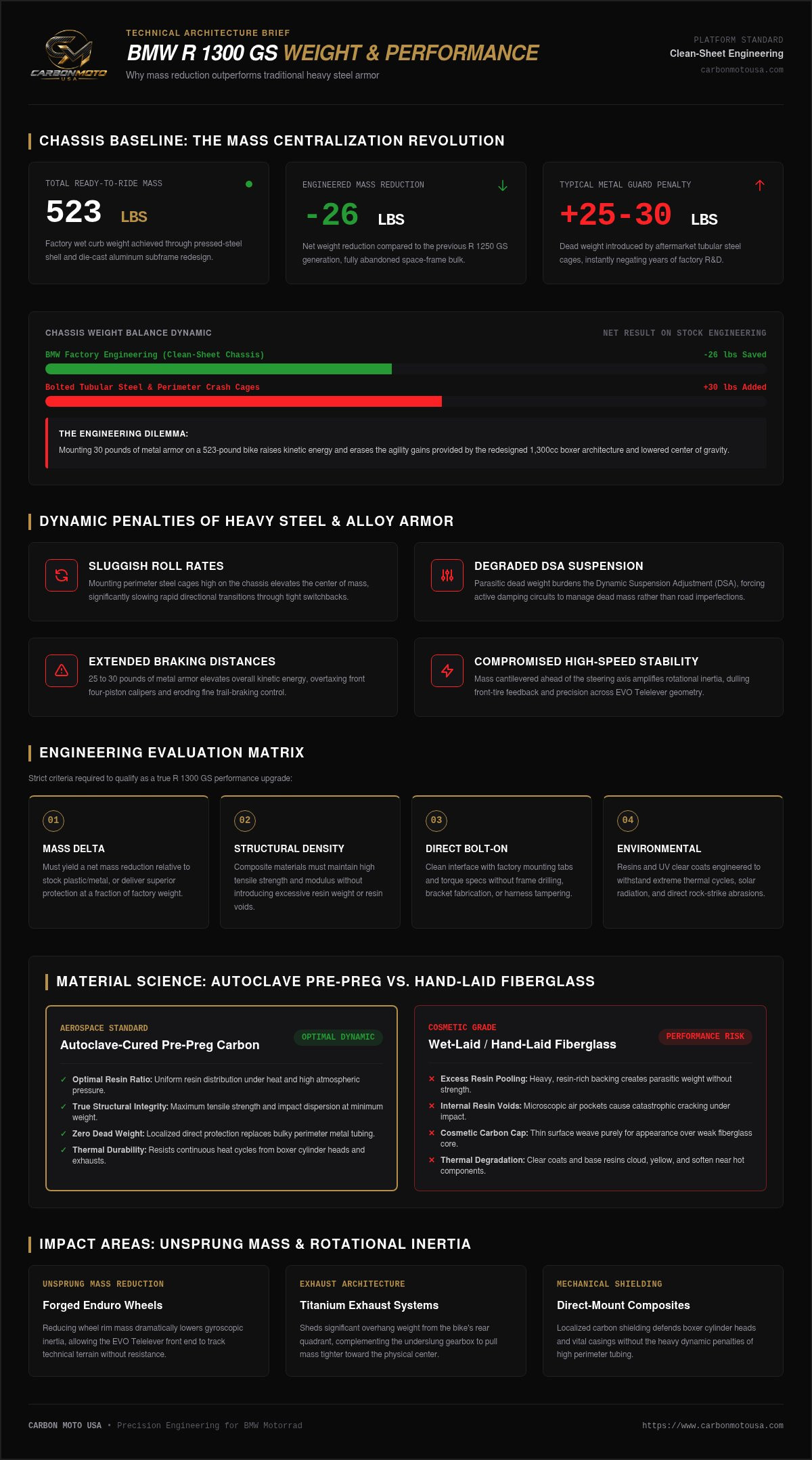
Bolting thirty pounds of tubular steel onto a clean-sheet adventure motorcycle is the fastest way to erase years of German engineering. BMW trimmed 26 pounds from the platform to create a 523-pound machine with razor-sharp agility, yet many riders immediately weigh down that chassis with bulky metal guards and generic add-ons. If you want real dynamic performance instead of added bulk, selecting the right BMW R 1300 GS performance accessories demands a disciplined, weight-conscious approach. You chose this machine for its responsive balance, and every component you install should elevate that capability rather than compromise it.
Discover the top functional upgrades engineered to reduce mass, sharpen throttle response, and protect vital mechanicals while matching exact factory tolerances. We break down the most impactful modifications, from titanium exhaust options and forged enduro wheels to autoclave-cured pre-preg carbon composites, giving you the technical insight needed to build a lighter, faster, and perfectly balanced build.
Key Takeaways
- Protect the chassis's factory weight savings by choosing lightweight, localized protection over heavy tubular steel bars.
- Apply an engineering-led evaluation matrix to select genuine BMW R 1300 GS performance accessories that deliver measurable dynamic handling gains.
- Learn to distinguish between cosmetic wet-laid fiberglass and autoclave-cured pre-preg carbon composites built for structural integrity and heat resistance.
- Identify how reducing unsprung mass through forged enduro wheels and titanium components sharply reduces rotational inertia in technical terrain.
- Configure your ideal setup across specific riding profiles using direct bolt-on components that match factory mounting points and torque tolerances.
The Evolution of R 1300 GS Performance: Why Weight Reduction Outperforms Added Bulk
Every gram eliminated from a performance machine changes how it attacks an apex. When BMW Motorrad developed the R 1300 GS, engineers abandoned the traditional tubular space frame in favor of a pressed-steel shell and a die-cast aluminum subframe. This clean-sheet redesign dropped curb weight to 523 pounds ready to ride, yielding a 26-pound reduction over the R 1250 GS. Yet the aftermarket industry often encourages riders to undo this engineering triumph immediately. Bolting on heavy steel crash cages, cumbersome mounting plates, and dense alloy armor compromises the dynamic baseline built into the platform. Selecting functional BMW R1300GS specifications and chassis architecture upgrades demands evaluating mass centralization first, ensuring every addition works with the motorcycle rather than fighting it.
The Redesigned 1300 Boxer Architecture and Mass Centralization
Relocating the six-speed gearbox beneath the 1,300cc boxer twin dramatically condensed the engine footprint. It pulled rotational mass tighter toward the chassis centerline and dropped the center of gravity significantly. When mass concentrates near the physical center of the bike, roll inertia plummets. Directional changes require noticeably less handlebar input. Upgrading with lightweight BMW R 1300 GS performance accessories accentuates this responsive boxer geometry. Reducing weight at the motorcycle's outer edges allows the revised EVO Telelever front end and EVO Paralever rear to track rough pavement and technical terrain without unpredictable chassis wallow.
The Dynamic Cost of Traditional Steel and Heavy Alloy Accessories
Traditional touring builds rely on perimeter crash bars and dense steel brackets. On a motorcycle engineered for agility, that approach carries severe dynamic penalties:
- Sluggish Roll Rates: Mounting high steel bars raises the center of mass, noticeably slowing transitions through tight canyon switchbacks.
- Degraded Suspension Response: Extra dead weight taxes the factory Dynamic Suspension Adjustment (DSA), forcing damping circuits to manage parasitic load rather than road imperfections.
- Extended Braking Distances: Adding 25 to 30 pounds of metal armor increases kinetic energy, working the front four-piston calipers harder and compromising trail-braking control.
- Reduced High-Speed Stability: Heavy accessories placed ahead of the steering axis increase rotational inertia, dulling front-tire feedback at pace.
True protection doesn't require encasing your motorcycle in structural steel. High-performance builds replace heavy perimeter cages with localized, direct-mount composite components that shield critical mechanical parts while preserving baseline agility.
Evaluation Matrix: What Qualifies as a True R 1300 GS Performance Accessory?
Separating genuine upgrades from superficial bolt-ons requires a rigorous engineering standard. Many catalog items add aesthetic flair or bulk, but they contribute nothing to handling dynamics. As documented in Cycle World's technical evaluation of the R 1300 GS, shedding mass from this platform directly sharpens its flickability and high-speed stability. When vetting BMW R 1300 GS performance accessories, apply this four-part technical matrix:
- Mass Delta: The accessory must yield a net mass reduction relative to the stock plastic or metal assembly it replaces, or provide superior protection at a fraction of the weight.
- Structural Density: Materials must maintain exceptional tensile strength and modulus without introducing excessive resin weight or resin voids.
- Direct Bolt-On Alignment: Components must interface cleanly with factory mounting tabs without requiring drilling, bracket fabrication, or alterations to existing harness runs.
- Environmental Endurance: Clear coats and resins must resist high UV radiation, extreme thermal cycles, and rock-strike abrasions common during extended adventure routes.
Material Science: Autoclave Pre-Preg vs. Hand-Laid Fiberglass
Not all composite panels offer true performance value. Cheap aftermarket pieces rely on wet-laid fiberglass backing covered with an exterior cosmetic carbon weave. These wet-lay components are resin-rich, brittle, and heavy. In contrast, aerospace-grade autoclave pre-preg carbon uses high-strength weave impregnated with an exact ratio of resin under controlled cleanroom conditions. Processing these laminates under immense heat and pressure consolidates the layers and eliminates microscopic air pockets. The result is pure structural rigidity capable of withstanding engine radiant heat along cylinder heads and exhaust collectors without delamination, softening, or clear-coat yellowing.
Chassis Integration and Factory Mounting Tolerances
Precision fitment protects machine integrity. Installing accessories that force misalignment introduces parasitic shear stress to the aluminum subframe or sheet-metal chassis. Proper performance components utilize factory bolt locations and retain factory fastener torque specs. They seat flush, distribute mechanical loads evenly, and preserve engineered chassis flex patterns. For a deeper technical look at fitment protocols, review our detailed guide for BMW R 1300 GS carbon fiber parts.
If you're seeking to refine your build with functional composites engineered to strict structural standards, explore the race-proven catalog at Carbon Moto USA.
Top BMW R 1300 GS Performance Accessories: The Definitive Roundup
Building a high-capability GS requires deliberate component selection. Upgrading factory hardware with focused BMW R 1300 GS performance accessories lets you trim surplus weight while fortifying areas vulnerable to impact and abrasion. Principles highlighted in Department of Energy lightweight materials research demonstrate that replacing dense structural metals with composite laminates yields immediate benefits in inertia reduction and kinetic management. Below is an engineering evaluation of the top components transforming the dynamic profile of the platform.
Carbon Fiber Bodywork and Aero Components
Factory injection-molded plastics are built for mass-production budgets, not lightweight stiffness. Replacing standard fairings with structural autoclave pre-preg carbon fiber cuts panel mass by up to 70 percent. Rigid composite tank covers and beak extensions resist aerodynamic flutter at triple-digit highway speeds, smoothing airflow around the cockpit. Upgraded composite radiator cowls direct incoming air precisely through cooling channels, preventing high-speed buffeting across the rider's knees and maintaining stable Boxer cylinder head thermals during sustained climbs.
Frame Protection and High-Wear Resistance
Aggressive off-road boots quickly grind through the factory subframe finish and engine casings. Bolting on 25 pounds of perimeter steel tubing solves the wear problem by crippling corner entry speed. Installing high-tensile R 1300 GS carbon fiber frame covers delivers superior localized shielding at a fraction of the mass. The multi-ply weave dissipates direct strike energy across interlocking carbon filaments rather than transferring shock loads directly into aluminum frame castings, providing true competition-grade resistance against roost, rocks, and hard-shell enduro boots.
Suspension, Ergonomics, and Lever Systems
Precise control at the contact points completes the performance loop. Strategic cockpit and unsprung upgrades include:
- Titanium Slip-On Silencer: An EC/ECE-compliant titanium silencer sheds roughly 0.5 pounds high on the subframe while boosting low-end response to 4.5 Nm of torque at 2,300 rpm without ECU modification.
- Forged Enduro Wheels: Shaving 3.9 pounds of rotating unsprung mass drops rotational inertia by 15 to 20 percent, immediately accelerating flickability between turns.
- CNC Billet Ergonomic Controls: Multi-position adjustable brake and clutch levers allow fine calibration of control engagement, reducing forearm pump on technical descents.
- Wide-Platform Footpegs: Broader serrated aluminum bases expand rider leverage over the chassis centerline, enhancing standing stability across loose shale.
- Sensor Guards: Specialized composite covers protect exposed EVO Telelever ride-height sensors from trail debris without adding ballast.
Rider-Specific Build Strategies: Tailoring Accessories to Your Terrain
Configuring an adventure motorcycle requires an intentional roadmap. Rather than buying parts at random, follow a disciplined three-step pathway: define your primary operating terrain, audit your chassis for non-functional mass, and integrate targeted BMW R 1300 GS performance accessories that serve your riding mission. Tailoring your build to a defined profile preserves the motorcycle's sharp geometry while optimizing it for specific demands.
The Dynamic Canyon and Sport-Touring Profile
Pavement-focused builds prioritize aerodynamic stability and rapid side-to-side transitions. Focus on shedding mass ahead of the triple clamp. Replace bulky stock panels with lightweight composite tank covers and beak extensions to sharpen turn-in response at high lean angles. Pair these with a low-profile sport windscreen to eliminate turbulent helmet buffeting without creating frontal drag. Finish the cockpit with multi-adjustable CNC levers and textured billet foot controls, giving you the micro-adjustability required for aggressive canyon carving and precise trail-braking control.
The High-Speed Backcountry Discovery Route (BDR) Profile
Riders tackling technical two-track, gravel corridors, and rocky mountain passes need localized protection that doesn't penalize suspension travel. Target high-wear zones with direct-mount composite frame guards and cylinder head protection to deflect rock roost and heavy boot wear. Install rigid handguards that resist lever strike deflection without transmitting vibration into the handlebar. By avoiding heavy perimeter steel tubing, your unladen vehicle weight remains low. This allows the semi-active electronic suspension to react instantly to washboard stutter without bottoming out.
The Minimalist Transcontinental Profile
Cross-country travel demands efficiency, sustained speed, and reduced physical fatigue. Aerodynamic efficiency takes center stage here. Add composite wind splitters and upper fairing deflectors to direct turbulent air away from your shoulders during long highway transit days. Use lightweight composite cockpit brackets to mount GPS systems and communications gear without introducing steering oscillations. Ensure all luggage and accessory mounts preserve the full operational range of the factory Adaptive Vehicle Height Control and DSA sensors.
Match your machine to your riding goals with precision-engineered composites. Explore race-developed components and configure your build today with BMW R 1300 GS carbon fiber hardware from Carbon Moto USA.
Engineering and Installing Precision Carbon Components for the R 1300 GS
Precision manufacturing demands equal precision during installation. Carbon Moto USA engineers components specifically around the BMW R 1300 GS platform, utilizing autoclave pre-preg fabrication to match OEM chassis tolerances. Every mounting hole, contour, and tab aligns with factory hardpoints, eliminating the need for drilling, grinding, or subframe modification. Because carbon composites behave differently than flexible injection-molded plastics, mounting these BMW R 1300 GS performance accessories requires disciplined garage practice to preserve structural integrity.
Precision Garage Installation Standards
Mounting composite panels requires proper torque management and vibration damping. Follow these essential assembly rules:
- Use Low-Range Torque Wrenches: Never tighten fasteners by feel. Composite plies crack under uneven clamping loads. Use an accurate quarter-inch drive torque wrench calibrated for low values (typically 2 to 5 Nm for bodywork fasteners) to prevent localized crushing of the clear coat and laminate.
- Apply Medium-Strength Threadlocker: Boxer engines produce distinct secondary pulses that can back out fasteners over time. Place a single drop of blue, non-permanent threadlocker on clean metal threads to prevent hardware from loosening.
- Transfer Factory Isolators: Carefully transfer stock rubber grommets and stepped metal collars from OEM plastic panels to your composite replacements. These isolators decouple engine harmonics from the rigid weave and prevent point-load stress risers.
Long-Term Maintenance and Finish Preservation
Preserving the depth and protective properties of high-grade carbon fiber requires straightforward care. Wash surfaces using pH-neutral automotive soaps and plush microfiber towels. Never use harsh petroleum-based degreasers or abrasive polishes on matte finishes, as rubbing will permanently burnish the low-sheen clear coat into an uneven gloss. For trail dust and dried mud accumulated during backcountry rides, flood the area with low-pressure water to lift abrasive grit before touching the weave. Conduct routine pre-ride visual checks on fastener tightness and verify that wiring harnesses maintain clearance from panel edges.
Ready to upgrade your adventure machine with authentic autoclave-cured composites? Check out our complete line and explore Carbon Moto USA performance upgrades tailored for modern platforms.
Transform Your Machine with Purpose-Built Performance
Unlocking the full potential of your motorcycle comes down to disciplined selection. BMW engineered a lighter, sharper boxer platform, and preserving that dynamic balance means resisting the urge to install heavy metal armor. When you choose genuine BMW R 1300 GS performance accessories, you don't have to compromise between impact protection and flickability.
True performance lives in the details. Every composite panel should enhance mechanical capability and match strict factory tolerances. Upgrade your BMW R 1300 GS with precision carbon fiber components at Carbon Moto USA. Built from autoclave-cured pre-preg composites, these direct bolt-on parts mount seamlessly to OEM hardware locations to maximize strength while cutting dead weight. Backed by specialized US-based technical support and fast domestic fulfillment, it's the definitive way to elevate your build. Shed the excess mass, respect the chassis, and enjoy your boxer at its absolute best.
Frequently Asked Questions
Do carbon fiber performance accessories reduce the off-road durability of the BMW R 1300 GS?
No, properly engineered autoclave-cured carbon fiber actually enhances impact resistance compared to standard OEM ABS plastics. The high-modulus weave absorbs rock strikes and boot abrasion by distributing impact loads across continuous fiber strands. Unlike brittle wet-lay fiberglass or soft plastics, structural pre-preg carbon retains tensile strength without cracking, giving your chassis dependable defense against trail debris on aggressive backcountry terrain.
Will installing aftermarket performance accessories void the BMW factory warranty?
Direct bolt-on BMW R 1300 GS performance accessories that mount to existing factory hardpoints do not void the overall vehicle warranty under US Magnuson-Moss Warranty Act protections. Only modifications causing direct mechanical failure, such as non-compliant exhaust de-cats or unapproved ECU flashing that alters emissions, threaten dealer warranty claims. Swapping body panels, frame protectors, and factory-spec wheels preserves full manufacturer coverage.
How much total weight can be saved on an R 1300 GS using carbon fiber components?
Replacing stock injection-molded bodywork with structural carbon fiber can trim between 4 to 8 pounds depending on the coverage. High-grade autoclave pre-preg composites deliver up to a 70 percent mass reduction over standard plastic panels. When combined with lightweight forged wheels and a titanium slip-on muffler, total weight savings across the platform can approach 12 to 14 pounds, significantly lowering the center of gravity.
What is the structural difference between pre-preg autoclave carbon fiber and wet-lay carbon?
Pre-preg carbon features exact, factory-metered resin impregnated into structural weave under sterile conditions, then cured under intense heat and pressure inside an autoclave. This eliminates microscopic voids and ensures maximum tensile strength. Wet-lay parts use manual resin brushing over cosmetic carbon and cheap fiberglass backing. This results in heavy, brittle parts that easily soften, crack, or bubble when subjected to boxer heat cycles.
Can carbon fiber performance parts be installed at home using standard motorcycle hand tools?
Yes, you can complete installations in a home garage with standard metric hex and Torx keys. Because premium BMW R 1300 GS performance accessories align precisely with OEM mounting points, no drilling or cutting is required. Always use a calibrated low-range torque wrench to tighten fasteners between 2 and 5 Nm, and apply a small drop of medium threadlocker to keep hardware secure against engine vibration.
Are performance accessories compatible with both standard R 1300 GS and Adventure trim packages?
Many core chassis components share identical mounting geometry across both models, but certain bodywork elements differ. Frame protectors, cylinder head covers, and wheel upgrades bolt directly to both variants. However, enlarged aluminum fuel cell covers and proprietary windscreen brackets on the Adventure package require dedicated fitment profiles. Always confirm product fitment specifications for your exact model year and subframe package before installation.
How do carbon fiber body panels tolerate heat generated by the 1300 cc boxer cylinder heads?
Autoclave-cured composites utilize high-temp epoxy resin matrices engineered to withstand continuous engine operating temperatures without structural degradation. When mounted near the boxer cylinder heads and exhaust collectors, pre-preg carbon acts as an effective thermal barrier, maintaining structural rigidity and resisting heat warping. High-grade UV clear coats also protect the surface from thermal discoloration, preventing the yellowing common to inferior wet-lay resins.