Carbon Moto USA / Rider support
BMW R 1300 GS Carbon Fiber Frame Covers: Performance vs. OEM Plastic

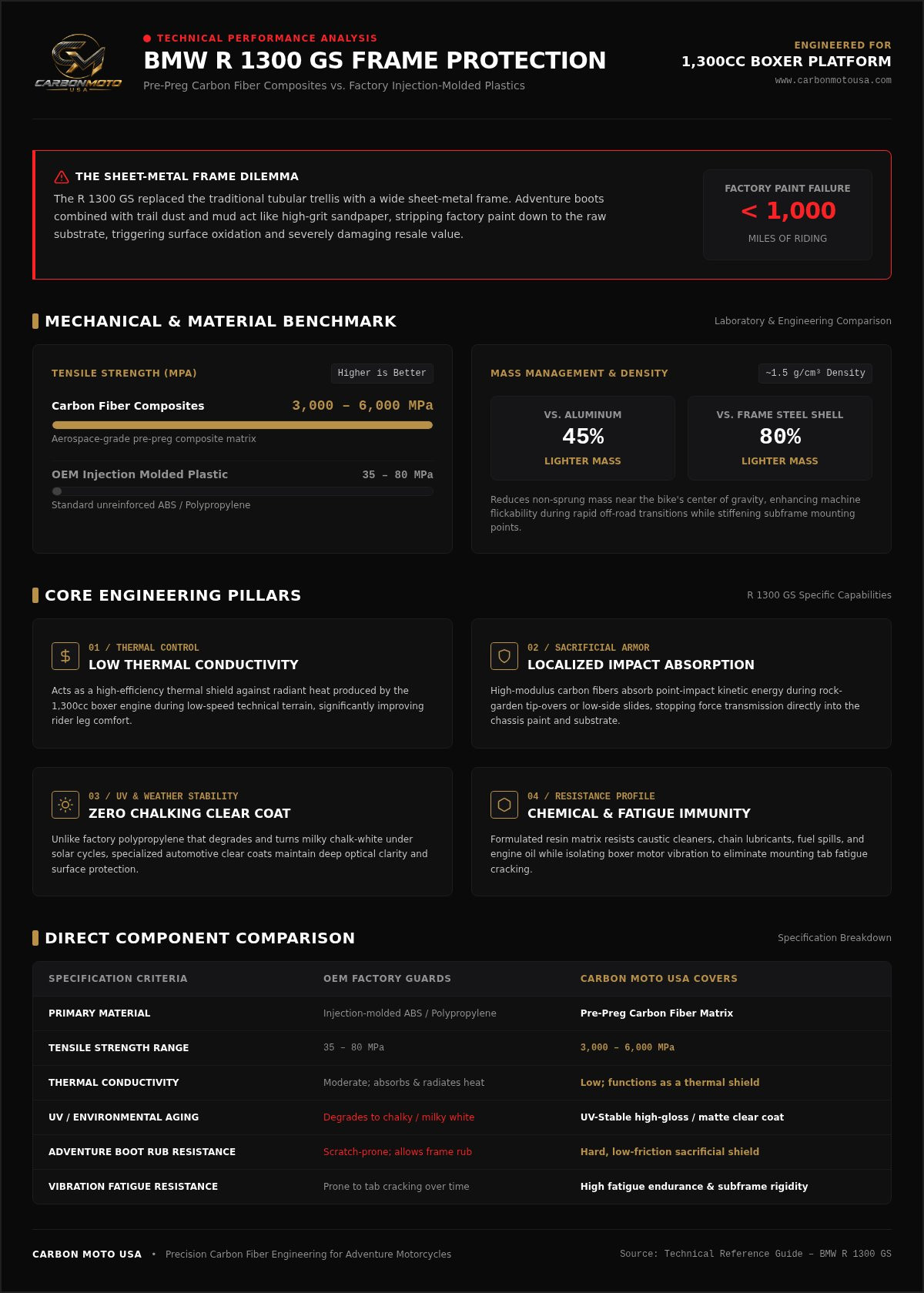
Your heavy adventure boots can strip the factory paint off a brand-new BMW R 1300 GS frame in fewer than 1,000 miles. It's a frustrating reality for riders who expect mechanical perfection from their machine. You likely find that the standard OEM plastic guards feel inadequate for a bike of this caliber, which is why many enthusiasts turn to R 1300 GS carbon fiber frame covers for a more durable and refined solution. These factory plastics scratch easily and offer minimal resistance to the radiant engine heat that builds up during slow, technical off-road sections.
This guide explains why high-performance carbon fiber is a critical upgrade for both structural protection and thermal management. You'll discover how the low thermal conductivity of aerospace-grade composites keeps your legs cooler than factory plastic ever could. We'll examine the technical advantages of pre-preg carbon fiber, its superior strength-to-weight ratio, and how it preserves the integrity of the sheet-metal frame. We'll also provide a clear comparison of weave and finish options to ensure your bike reflects the precision engineering it represents.
Key Takeaways
- Understand why the BMW R 1300 GS sheet-metal frame is highly vulnerable to abrasive wear from adventure boots and requires immediate protection.
- Compare the superior tensile strength and durability of R 1300 GS carbon fiber frame covers against standard injection-molded factory plastics.
- Discover how the low thermal conductivity of aerospace-grade composites acts as an effective heat shield, improving rider comfort during technical sections.
- Evaluate the technical and aesthetic differences between twill and forged carbon finishes to select the right weave for your specific build.
- Learn how precision-engineered carbon components integrate seamlessly with the machine’s architecture to create a cohesive, high-performance appearance.
Protecting the Core: Why Your R 1300 GS Needs Frame Covers
The R 1300 GS represents a significant departure from previous generations. BMW abandoned the exposed tubular trellis frame for a smooth, wide sheet-metal main frame. While this improves chassis rigidity, it creates a large, flat target for your boots. Every time you stand on the pegs or shift your weight, your inner boot grinds against the frame. Add a layer of trail dust or mud, and your boots become high-grit sandpaper. This constant friction quickly strips the finish down to the raw substrate.
Without high-quality R 1300 GS carbon fiber frame covers, your frame paint will likely fail within the first season. This isn't just an aesthetic concern. Exposed metal on a steel shell frame is prone to oxidation. It also kills resale value. A potential buyer sees a worn frame and assumes the bike has been thrashed off-road without proper care. Protection is a tactical decision to preserve your investment and ensure the machine remains in showroom condition.
The Problem with OEM Plastic Guards
Factory-installed guards are typically molded from basic ABS or polypropylene. These materials are chosen for cost, not performance. They degrade under the intense heat cycles generated by the 1,300cc boxer engine. After a few months of riding, you'll notice the plastic turning a milky, chalky color from UV exposure. These guards also lack structural rigidity. In a low-side slide or a simple tip-over in a rock garden, they often crack or shear off entirely. They look out of place on a machine designed for elite performance.
Carbon Fiber as a Protective Shield
Integrating carbon fiber reinforced polymers into your build changes the protection profile completely. High-modulus carbon fiber provides a level of impact resistance that plastic cannot match. It serves as a sacrificial layer between the environment and your chassis. If you drop the bike on a technical trail, the carbon fiber absorbs the localized impact energy rather than transferring it directly to the frame paint.
Boot rub remains the primary enemy for any GS owner. Heavy adventure boots with rigid hinges and metal buckles are relentless. Carbon Moto USA provides R 1300 GS carbon fiber frame covers that offer a hard, low-friction surface. This prevents the "polishing" effect that ruins factory finishes. By installing these covers early, you ensure the frame looks as good in five years as it did the day you took delivery. It's a precision instrument. Treat it like one.
Engineering Excellence: Carbon Fiber vs. Factory Plastic
The technical gap between factory-grade polymers and aerospace composites is vast. Standard BMW frame guards utilize injection-molded ABS or polypropylene, materials that prioritize production speed over mechanical integrity. In contrast, R 1300 GS carbon fiber frame covers leverage the superior properties of advanced carbon fiber composites to provide a shield that is both lighter and significantly stronger. While automotive plastics offer a tensile strength between 35 and 80 MPa, high-grade carbon fiber reaches 3,000 to 6,000 MPa. This difference ensures that the covers remain intact under stresses that would cause OEM plastic to shatter.
Weight Reduction and Structural Rigidity
Mass management is critical for the R 1300 GS. The density of carbon fiber sits at approximately 1.5 g/cm³, making it nearly 45% lighter than aluminum and 80% lighter than the steel shell of the main frame. By replacing or supplementing factory components with carbon fiber, you reduce non-sprung mass near the bike's center of gravity. This contributes to the machine's "flickability" during rapid transitions. These covers don't just sit on the surface; their inherent rigidity provides a localized reinforcement layer to the subframe attachment points, preventing the flex common with flimsy plastic alternatives.
Long-term Durability in Adventure Conditions
Extreme environments demand chemical and thermal stability. Adventure riding exposes your bike to caustic cleaners, chain lube, fuel spills, and hot engine oil. High-quality carbon fiber components utilize a specialized resin matrix that resists chemical degradation far better than unreinforced thermoplastics. To prevent the "chalking" effect seen on older bikes, Carbon Moto USA applies a UV-stable clear coat that maintains its depth and clarity through years of solar exposure. These parts also handle engine vibrations without the fatigue cracking that often plagues thin plastic tabs.
High-modulus carbon fiber offers a structural impact tolerance that far exceeds the deflection limits of injection-molded plastic, ensuring your frame remains shielded during localized strikes. Choosing the right materials is the first step in a professional build. Explore our collection of precision-engineered carbon components to start your upgrade journey.
The "Dry Carbon" or prepreg manufacturing process is what sets these parts apart. By using carbon fiber that is pre-impregnated with resin and cured in an autoclave under vacuum and high pressure, we achieve a perfect resin-to-fiber ratio. This eliminates the air pockets and excess weight found in "wet" carbon or hand-laid fiberglass. For the R 1300 GS rider, this translates to a part that fits with surgical precision and withstands the rigors of the trail without delaminating.
Thermal Management and Rider Comfort on the R 1300 GS
The 145 hp output of the R 1300 GS produces substantial thermal energy that must be managed. Unlike the tubular frames of the past, the redesigned sheet-metal frame structure has a larger surface area that absorbs radiant heat from the engine and exhaust. During technical off-road climbs or urban traffic, the lack of airflow leads to rapid heat soak. This energy transfers through the frame directly into your inner ankles and calves. Installing R 1300 GS carbon fiber frame covers provides a technical solution to this discomfort by introducing a high-performance thermal barrier.
The Science of Heat Insulation
Carbon fiber reinforced polymer is a naturally poor conductor of heat. While structural steel conducts heat at approximately 50 W/m·K, the through-thickness thermal conductivity of a carbon composite is often as low as 1.0 W/m·K. This massive disparity means the covers don't just shield the frame from scratches; they actively prevent engine heat from reaching your riding gear. You'll notice a significant difference in comfort during long days in the saddle. By reducing the ambient temperature around your lower legs, you decrease physical fatigue and maintain a sharper focus on the trail ahead. This insulation also protects expensive Gore-Tex liners and plastic boot buckles from localized heat damage that can occur during extended slow-speed operation.
Optimizing the GS for Hot Climate Riding
Riders tackling desert crossings or mid-summer tours face the dual challenge of high ambient air and rising machine temperatures. R 1300 GS carbon fiber frame covers ensure that the primary contact points between the rider and the machine remain at a manageable temperature. While the frame itself may still experience heat soak, the composite layer prevents that energy from transferring to your body. This is perhaps the most underrated performance benefit of carbon fiber. It isn't just about aesthetics or weight; it's about extending your riding window in extreme conditions. Maintaining a consistent temperature at the rider interface allows you to stay comfortable when the environment is anything but. It's a functional refinement that transforms the 1300 GS into a more capable long-distance explorer.
Selection Guide: Weaves, Finishes, and Fitment Standards
Selecting the optimal R 1300 GS carbon fiber frame covers involves more than just picking a part from a catalog. It requires a technical understanding of how different materials and finishes interact with the machine’s environment. Because the R 1300 GS features a unique sheet-metal frame, the fitment must be absolute to prevent vibration-induced wear. Your choice of weave and finish should align with your primary riding style, whether you’re navigating technical single-track or high-speed alpine passes.
The traditional 3K 2x2 twill weave remains the benchmark for most riders due to its diagonal pattern and ability to conform to complex curves. However, forged carbon is gaining traction for the GS platform. Forged carbon utilizes chopped fibers compressed under heat, resulting in a marbled look that offers multi-directional impact absorption. This makes it an excellent choice for riders who prioritize structural durability in rock-heavy environments. Regardless of the weave, ensure the part is designed specifically for your model year, as the standard R 1300 GS (2024+) and the R 1300 GS Adventure (2025+) utilize different side panel and fuel tank geometries.
Identifying High-Quality Carbon Weave
A precision instrument deserves a precision finish. When evaluating carbon components, inspect the weave alignment first. In high-quality parts, the fibers remain straight and consistent, following the contours of the frame without distorting or "pulling." Inferior parts often show "voids" or pinhole air bubbles in the resin matrix, which compromise both structural integrity and aesthetic depth. Meticulously hand-finished edges are critical for frame fitment because they allow the cover to sit flush against the chassis without interfering with factory accessory bars or electrical routing.
Gloss vs. Matte: The GS Rider's Dilemma
Your choice of finish dictates the long-term maintenance profile of the bike. A high-gloss finish provides maximum visual depth, accentuating the multi-layered weave. This is the standard for street-oriented builds where a showroom "pop" is the priority. However, adventure riders often prefer a matte or satin finish. Matte surfaces are highly effective at hiding the fine swirl marks caused by trail dust and grit, matching the rugged aesthetic of the Trophy edition. To ensure your protection matches your performance goals, shop our full range of BMW R 1300 GS carbon fiber components and select the finish that defines your machine.
- Gloss Maintenance: Apply a high-quality ceramic coating to provide a sacrificial layer against light scratches and UV rays.
- Matte Maintenance: Avoid waxes or polishes that contain silicones, as these can create uneven shiny spots on the surface.
- Fitment Standards: Verify that the mounting points utilize the existing OEM locations to ensure a rattle-free installation that doesn't require permanent modification to your frame.
Elevating the Build: Integrating Carbon Moto USA Frame Covers
Carbon Moto USA approaches every component with a commitment to mechanical integrity. When you install R 1300 GS carbon fiber frame covers, you're not just adding a protective layer. You're integrating a part designed to match BMW’s exact factory tolerances. We prioritize precision engineering to ensure every weave alignment and mounting point mirrors the bike's original architecture. This intentional design process transforms a mass-produced adventure bike into a bespoke performance machine. We analyze the specific stress points of the sheet-metal frame to ensure our covers provide maximum coverage without adding unnecessary bulk. We don't settle for 'close enough.' We aim for a flush fit that feels like an extension of the subframe. This level of detail ensures that your bike retains its premium feel even under the harshest conditions.
A Cohesive Aesthetic Strategy
Achieving a sophisticated look requires a unified approach. Frame covers serve as the central anchor for a carbon-focused build. Pair them with rear huggers and front fenders to create a consistent visual language across the chassis. This 'factory-plus' aesthetic avoids the cluttered look of mismatched accessories. It highlights the machine's technical prowess without appearing overly aggressive. For a deeper dive into planning your build, consult our comprehensive guide to BMW R 1300 GS carbon fiber parts. A methodical build ensures that every part works in harmony, both functionally and visually. The goal is to enhance the bike's silhouette while reinforcing its most vulnerable zones. By choosing parts from the same specialist, you ensure the weave patterns and finishes remain consistent across the entire machine.
Confidence in Every Component
Specialized components outperform generic aftermarket parts because they respect the machine’s specific requirements. We utilize high-grade materials and meticulous craftsmanship to ensure durability that lasts the life of the bike. This means no rough edges, no misaligned holes, and no compromises on quality. You can ride with total confidence, knowing your protection is as advanced as the boxer engine itself. Generic parts often fail to account for the thermal expansion of the frame or the specific vibration frequencies of the 1300cc engine. Our parts are built to endure. We use an autoclave curing process that eliminates air pockets, ensuring structural consistency throughout the entire piece. This isn't just about looks; it's about mechanical reliability in the backcountry. Explore our BMW R 1300 GS Carbon Fiber collection to begin your machine’s transformation. Every upgrade is a step toward excellence.
Refine Your Machine with Technical Precision
The transition to the R 1300 GS platform demands a shift in how you approach protection. Standard plastic guards can't match the thermal insulation or impact resistance required for high-stakes adventure riding. By integrating R 1300 GS carbon fiber frame covers into your build, you address the critical vulnerabilities of the sheet-metal frame while enhancing rider comfort through superior heat management.
Carbon Moto USA maintains a specialized performance focus, utilizing high-grade Prepreg carbon fiber to ensure every component withstands the rigors of the trail. Our meticulous engineering process respects BMW factory tolerances, delivering a flush fit that generic parts simply can't achieve. This isn't just an aesthetic choice; it's a commitment to mechanical excellence and long-term chassis integrity. Don't let boot rub or engine heat compromise your journey. Upgrade your R 1300 GS with premium carbon fiber today and experience the difference that professional-grade composites bring to your machine. Your Boxer is ready for its next evolution.
Frequently Asked Questions
Do carbon fiber frame covers actually protect the bike in a crash?
Carbon fiber serves as a high-strength sacrificial barrier during a slide or tip-over. While OEM plastic often shatters upon impact, these covers utilize advanced composites to absorb energy and prevent structural gouging of the sheet-metal frame. They won't stop a frame from bending in a high-speed wreck, but they're highly effective at preventing the abrasive damage that leads to costly repairs or total losses.
Will these frame covers fit with my aftermarket crash bars?
Most R 1300 GS carbon fiber frame covers are engineered to mirror factory dimensions, ensuring compatibility with standard accessory mounting zones. If your aftermarket crash bars utilize the main frame shell as a direct clamping point, you should verify clearance before final torquing. Our parts prioritize a flush fit, so they typically sit behind the bars without interference, maintaining a clean and integrated appearance.
How do I clean and maintain carbon fiber frame covers?
Maintenance is straightforward but requires the right chemistry. Wash the covers with pH-neutral motorcycle soap and a soft microfiber mitt to prevent swirl marks in the clear coat. Avoid abrasive scouring pads or harsh degreasers that can cloud the resin matrix. If you've chosen a matte finish, don't use traditional waxes, as they'll create inconsistent shiny patches on the marbled surface.
Can carbon fiber frame covers melt from engine heat?
Quality Prepreg carbon fiber won't melt under normal or extreme operating temperatures. Unlike factory ABS plastic, which can soften or deform when exposed to radiant heat from the 1,300cc boxer engine, carbon fiber remains structurally stable. Its low thermal conductivity makes it an excellent heat shield, keeping the frame surface cooler and protecting your riding gear from thermal degradation during slow, technical sections.
Do I need special tools to install R 1300 GS frame covers?
You don't need specialized workshop equipment for this upgrade. Most installations require only a standard set of Torx keys, typically T25 and T30 sizes, which are standard for BMW hardware. The parts are designed to utilize existing mounting locations, ensuring a secure fit without the need for drilling or permanent modification. Always follow the specific torque values listed in your service manual for any reused bolts.
Will installing carbon fiber parts void my BMW warranty?
Replacing cosmetic or protective guards with carbon fiber components won't void your factory warranty. Manufacturers can't deny warranty claims simply because you've installed aftermarket parts, provided those parts didn't cause a specific mechanical failure. Since these covers are non-mechanical and don't interface with the engine management or braking systems, they're considered safe, bolt-on performance enhancements that preserve the bike's value.
What is the weight difference between carbon fiber and OEM plastic covers?
Carbon fiber is approximately 80% lighter than steel and 45% lighter than aluminum. While the factory plastic guards are already relatively light, they're often bulky to achieve necessary strength. R 1300 GS carbon fiber frame covers provide superior rigidity at a fraction of the thickness. This reduces the overall mass near the center of the machine, contributing to a more responsive feel during rapid direction changes.
Is 'Dry Carbon' better than 'Wet Carbon' for my R 1300 GS?
Dry carbon is the superior choice for high-performance adventure bikes. It's manufactured using pre-impregnated fibers cured in an autoclave, which eliminates excess resin and air pockets. This results in a part that is significantly stronger and more heat-resistant than "wet" carbon alternatives. For the R 1300 GS, dry carbon ensures the precision fitment and durability required to withstand constant boot friction and trail debris.