Carbon Moto USA / Rider support
The Ultimate Guide to BMW R 1300 GS Carbon Fiber Parts: Performance & Aesthetics

BMW engineered the R 1300 GS to be 12 kg lighter than its predecessor, but for the rider who demands mechanical perfection, this factory diet is just the beginning. You recognize that every gram of high-center-of-gravity mass affects how your bike tips into a corner or recovers from a slide. It's frustrating to invest in a flagship machine only to worry about fitment tolerances or the inevitable yellowing of cheap BMW R 1300 GS carbon fiber parts made from resin-heavy "wet carbon." You seek components that match the precision of German engineering, not accessories that feel like an afterthought.
We've designed this guide to help you navigate the technical journey of upgrading your machine. You'll discover how premium components transform the GS through significant weight reduction, superior durability, and precision engineering. We'll examine how autoclave-cured prepreg composites offer three times the specific stiffness of structural steel, providing superior resistance to aerodynamic buffeting. This article breaks down the essential components that improve heat management, enhance airflow, and ensure your bike remains a precision instrument on any terrain.
Key Takeaways
- Understand how reducing unsprung mass through carbon fiber upgrades directly improves the steering flickability and suspension response of the R 1300 GS platform.
- Identify the essential BMW R 1300 GS carbon fiber parts required to balance high-impact frame protection with refined aerodynamic performance.
- Learn why the autoclave-cured dry carbon process is the technical benchmark for achieving a superior resin-to-fiber ratio and long-term structural integrity.
- Implement a methodical two-phase customization plan that prioritizes critical protection components before moving to secondary wind-management refinements.
The R 1300 GS Evolution: Why Carbon Fiber is the Ultimate Upgrade
The R 1300 GS marks a fundamental pivot in BMW’s design philosophy. By shedding 12 kg compared to the R 1250 GS, the factory prioritized a more compact, agile footprint. Integrating BMW R 1300 GS carbon fiber parts is the logical progression of this lightweight strategy. These high-tensile composites offer the structural rigidity required for the EVO Telelever front end while eliminating the bulk of traditional materials. While OEM plastic fairings serve a purpose for mass production, they often fail under the mechanical stresses of high-speed touring and off-road impacts. They flex at speed and can degrade over time when exposed to the elements.
The Functional Advantage of Composites
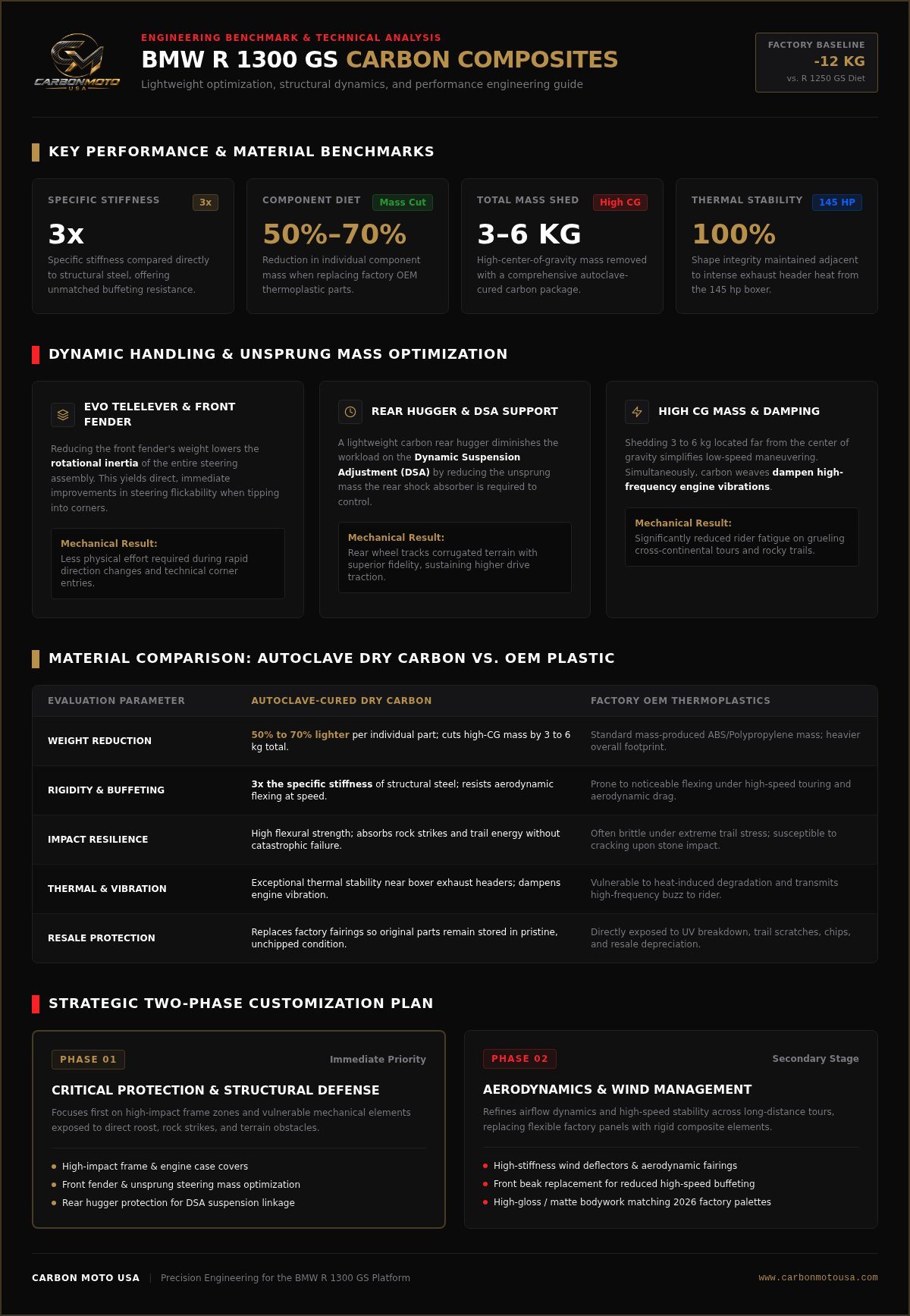
Composites provide a strength-to-weight ratio that injection-molded ABS cannot match. High-end dry carbon components reduce individual part mass by up to 70 percent. This reduction is critical for parts located far from the bike’s center of gravity, such as the front beak or rear hugger. Beyond weight, carbon fiber exhibits exceptional thermal stability. It maintains its shape and structural integrity even when positioned near the intense heat of the 145 hp boxer engine's exhaust headers. Additionally, the inherent properties of carbon weaves help dampen high-frequency engine vibrations. This results in a more refined feel during long-distance travel, reducing rider fatigue through superior mechanical damping.
Aesthetic Intentionality
Achieving a 'factory-plus' aesthetic requires meticulous attention to detail. Premium BMW R 1300 GS carbon fiber parts should look like they emerged from the BMW design studio, not an aftermarket shop. Whether you choose a high-gloss or matte finish, these components align perfectly with the 2026 BMW color palettes. This upgrade also serves a practical financial purpose. By replacing factory bodywork with carbon fiber, you can store your original OEM parts in pristine condition. This protects them from rock chips, trail debris, and UV damage. It ensures that the original components remain in new condition, effectively preserving the machine’s resale value. View your motorcycle as a precision instrument where every component must justify its place through both form and function.
Performance Engineering: Weight Reduction and Structural Integrity
Unsprung mass refers to the weight of components not supported by the motorcycle's suspension, such as wheels, tires, and fenders, which directly dictates how quickly the suspension reacts to road irregularities. On a machine as sophisticated as the R 1300 GS, every gram removed from these areas yields exponential gains in handling. When you reduce the weight of the front fender, you lower the rotational inertia of the steering assembly. This modification allows the bike to tip into corners with less effort, providing a noticeable increase in steering flickability. Similarly, a lightweight rear hugger reduces the workload on the Dynamic Suspension Adjustment (DSA) system. By minimizing the mass the rear shock must control, the wheel tracks the terrain with higher fidelity, maintaining better traction on corrugated surfaces.
The Weight Reduction Audit
The technical shift from factory materials to BMW R 1300 GS carbon fiber parts represents a significant leap in mechanical efficiency. Standard OEM fenders and covers utilize mass-produced thermoplastics like ABS or polypropylene. While functional, these parts are heavy and prone to flex. High-end autoclave-cured dry carbon reduces individual component mass by 50 to 70 percent. For a dedicated adventure rider, outfitting a bike with a comprehensive carbon setup can shed between 3 to 6 kg of high-center-of-gravity mass. This cumulative reduction is particularly felt during low-speed technical maneuvers. A lighter bike is simply easier to manage, which directly correlates to reduced rider fatigue during grueling cross-continental tours or technical trail sections. Explore the technical advantages of our BMW R 1300 GS carbon fiber parts to see how precision engineering translates to trail performance.
Durability in Extreme Environments
Performance isn't just about weight; it's about structural integrity under duress. Carbon fiber possesses approximately three times the specific stiffness of structural steel, making it the ideal material for high-stress environments. In off-road scenarios, factory plastic often proves brittle, cracking upon impact from rock strikes or trail debris. Carbon fiber's superior impact resistance allows it to absorb energy without catastrophic failure. Furthermore, its exceptional flexural strength ensures that fairings and wind deflectors maintain their aerodynamic profile even under heavy wind loads at highway speeds. To protect the visual integrity of the weave, premium components utilize UV-inhibiting clear coats or specialized powder coatings. These treatments prevent the "yellowing" or clouding often seen in lower-grade "wet carbon" products, ensuring your machine retains its sophisticated finish through years of exposure to harsh sunlight and extreme weather.
Essential Carbon Fiber Components for the R 1300 GS
Selecting the right BMW R 1300 GS carbon fiber parts requires an understanding of how each component interacts with the machine's aerodynamics and thermal output. While previous sections detailed the physics of weight reduction, this analysis focuses on the specific hardware that defines a performance-oriented build. Every piece serves a dual purpose: enhancing the rider's environment and shielding critical mechanical systems from the rigors of adventure touring. High-performance upgrades should prioritize areas where OEM materials fail to meet the demands of extreme environments.
Cockpit and Aero Enhancements
Carbon fiber handguards provide a rigid structure that resists wind pressure at highway speeds, unlike the flexible OEM plastic equivalents. This rigidity ensures consistent airflow management and protects control levers during low-speed tip-overs. Instrument surrounds finished in matte carbon are essential for high-visibility riding; they eliminate distracting sun glare on the 6.5-inch TFT display. Precision-engineered wind deflectors, often referred to as winglets, further refine the experience by smoothing the laminar flow around the rider’s shoulders. This reduction in turbulence-induced fatigue is noticeable on cross-continental journeys.
Bodywork and Protection
Frame covers act as a sacrificial layer against the abrasive contact of off-road boots, preventing permanent damage to the chassis finish. The central tank cover replaces the standard plastic spine, providing a high-impact visual center that emphasizes the bike's mechanical integrity. Rear huggers are particularly vital for the R 1300 GS. They shield the vulnerable Dynamic Suspension Adjustment (DSA) rear shock from sandblasting and debris thrown by the rear tire. These BMW R 1300 GS carbon fiber parts maintain a sophisticated aesthetic while offering structural integrity that exceeds factory specifications.
The boxer engine's protruding cylinders require specialized protection that handles extreme thermal cycles. Carbon engine case guards and cylinder covers utilize the material's thermal stability to manage heat dissipation effectively. The 1,300 cc engine produces 145 hp and 149 Nm of torque, generating significant heat during technical low-speed sections. Unlike metal guards that can transfer impact energy directly to the engine casing, carbon fiber absorbs and distributes force. This reduces the risk of catastrophic engine damage in remote locations where a cracked casing could end a tour. It's a strategic upgrade that balances mechanical safety with refined craftsmanship.
Dry Carbon vs. OEM Plastic: The Quality Benchmark
Wet carbon fiber is unsuitable for performance adventure bikes because the excess resin increases mass and leads to structural bubbling when exposed to the high thermal output of a boxer engine. For the R 1300 GS, the standard for excellence is dry carbon. This material is defined by its manufacturing process, which prioritizes a high fiber-to-resin ratio to achieve maximum mechanical integrity. While factory plastics are designed for cost-efficiency and volume, dry carbon is engineered for those who view their motorcycle as a precision instrument. Carbon Moto USA exclusively utilizes dry carbon to ensure that every component meets the rigorous demands of the modern adventure rider.
The Autoclave Difference
The technical superiority of dry carbon stems from the autoclave curing process. We use pre-impregnated (prepreg) fibers that are placed into precision molds and subjected to intense heat and vacuum pressure. This environment forces out trapped air and excess resin, resulting in a part that is significantly lighter and stronger than wet-lay alternatives. This method ensures a consistent weave pattern, avoiding the "stretched" or distorted appearance common in budget components. Pay attention to the internal finish of your BMW R 1300 GS carbon fiber parts. A smooth, calibrated underside is essential for proper fitment and vibration management, preventing the abrasive wear that occurs when rough-backed parts rub against the frame or wiring looms.
Fitment and Factory Tolerances
BMW’s R 1300 GS features some of the tightest bodywork tolerances in the adventure segment. Precision molding is the only way to avoid the unsightly panel gaps that plague inferior aftermarket builds. Our components are engineered to match these factory specifications, utilizing pre-drilled mounting points for a seamless, bolt-on installation. This level of design accuracy ensures that the transition between carbon and OEM panels remains flush, preserving the machine’s sophisticated silhouette. High-grade clear coats with UV inhibitors have also debunked the myth of "yellowing." Modern finishes protect the weave from sun-bleaching and rock chips, maintaining a deep, three-dimensional luster even after years of cross-continental travel. Upgrade your build with precision-engineered dry carbon to experience a level of craftsmanship that factory plastic cannot provide.
Selection Strategy: Planning Your R 1300 GS Build
Approach your R 1300 GS build as a sequential engineering project. A methodical strategy ensures that each component integrates perfectly with your existing setup, including factory crash bars or luggage systems. By following a phased approach, you can prioritize functional improvements while managing the machine's overall weight distribution and protection needs. Each phase builds upon the last, resulting in a machine that is both technically superior and aesthetically cohesive.
- Phase 1: High-Impact Protection. Install frame covers and fenders first. These components shield the chassis from abrasive boot scuffs and reduce unsprung mass, offering immediate handling benefits. Prioritize function first.
- Phase 2: Aerodynamic Refinement. Integrate handguards and wind deflectors. These parts smooth the laminar flow around the cockpit, significantly reducing rider fatigue during high-speed touring.
- Phase 3: Visual Transformation. Complete the build with tank covers and fairings. This stage replaces large sections of factory plastic, achieving a cohesive, performance-oriented silhouette.
Prioritizing Your Upgrades
Start with BMW R 1300 GS carbon fiber parts that offer the most significant weight reduction per dollar. Components like the front fender or rear hugger provide tangible handling improvements by reducing rotational inertia and unsprung weight. When selecting finishes, consider your bike's paint scheme. Matte carbon offers a stealthy, technical appearance that complements the Triple Black edition, while high-gloss finishes provide a traditional racing aesthetic. To maintain the showroom luster, clean your carbon parts with pH-neutral soaps. Avoid abrasive waxes. Modern UV-inhibiting clear coats handle the elements well, but regular maintenance prevents trail dust from dulling the finish.
The Carbon Moto USA Advantage
Carbon Moto USA provides a curated catalog designed specifically for the R 1300 GS enthusiast. We focus on technical precision and mechanical integrity, ensuring that every part meets the tight tolerances required by BMW’s new frame design. Our expertise ensures you don't have to worry about the fitment issues common with generic aftermarket shops. We utilize specialized packaging to ensure that your precision-engineered components arrive in perfect condition. We're your knowledgeable partner in this technical journey, offering the support needed to transform your GS into a lighter, more capable machine. Shop the BMW R 1300 GS Carbon Fiber Collection to begin your build today.
Refining the Ultimate Adventure Machine
Transforming your R 1300 GS into a precision instrument requires more than just adding accessories; it demands a strategic upgrade to materials that match the bike's engineering. By choosing autoclave-cured dry carbon over factory plastics, you achieve a superior resin-to-fiber ratio and lasting structural integrity. This transition reduces high-center-of-gravity mass and improves aerodynamic laminar flow, ensuring your machine handles with the flickability BMW intended. It's a commitment to mechanical excellence that factory-grade components simply can't match.
Our specialized BMW R 1300 GS carbon fiber parts are designed with meticulous attention to factory tolerances, ensuring a seamless fit that preserves the bike’s sophisticated silhouette. Whether you are prioritizing high-impact protection or seeking a full visual transformation, each component serves as a functional necessity for the serious enthusiast. Elevate your R 1300 GS with precision carbon fiber and experience the difference that professional-grade craftsmanship brings to your technical journey. Your path to a lighter, more capable machine starts with intentional selection.
Frequently Asked Questions
Is carbon fiber more durable than the original BMW R 1300 GS plastic parts?
Carbon fiber provides superior durability compared to factory ABS plastic. It possesses roughly three times the specific stiffness of structural steel, allowing it to withstand rock strikes and trail debris without cracking. While OEM parts often become brittle over time, premium BMW R 1300 GS carbon fiber parts maintain their mechanical integrity through extreme thermal cycles and harsh UV exposure. This makes them an ideal choice for riders who demand long-term protection in rigorous off-road environments.
Do I need to modify my bike to install Carbon Moto USA parts?
You don't need to modify your motorcycle to install these components. Every part is engineered to match BMW's precise factory tolerances, utilizing the existing mounting points on the R 1300 GS chassis. These are direct bolt-on replacements for the original fairings and guards. This design philosophy ensures a seamless fit without the need for drilling, cutting, or custom fabrication. It simplifies the technical journey for enthusiasts who value precision and mechanical accuracy.
What is the difference between matte and gloss carbon fiber finishes?
The distinction between matte and gloss is aesthetic rather than functional. A gloss finish uses a polished clear coat to create a deep, three-dimensional effect that emphasizes the carbon weave. A matte finish provides a non-reflective, satin look that offers a more stealthy, technical appearance. Both options utilize high-grade UV inhibitors to prevent sun damage. Your choice should depend on whether you want a traditional racing look or a modern, understated profile.
Will carbon fiber parts affect my BMW factory warranty?
Installing carbon fiber bodywork typically doesn't affect your factory warranty. Under most regulations, a manufacturer can't void a warranty unless an aftermarket component directly causes a mechanical or electrical failure. Since these are non-invasive, bolt-on parts that replace external bodywork, they don't interfere with the engine's internal components or the bike's electronic systems. Always verify specific local laws or consult with your dealer if you have concerns about specific modifications.
How much weight can I realistically save on my R 1300 GS with carbon fiber?
A comprehensive carbon fiber setup can realistically shed between 3 to 6 kg from your machine. High-end dry carbon parts offer a mass reduction of 50 to 70 percent compared to the original injection-molded components. This weight savings is particularly significant when removed from high-center-of-gravity areas or unsprung parts like the front fender. Reducing this mass improves the bike's steering flickability and allows the suspension to react more precisely to technical terrain and road irregularities.
How do I clean and maintain carbon fiber motorcycle parts?
Clean your components using pH-neutral motorcycle soaps and soft microfiber towels. Avoid using abrasive chemicals, stiff brushes, or high-pressure washers, as these can scratch or dull the clear coat. To preserve the deep luster and UV protection, you can apply a high-quality automotive wax or a specialized ceramic coating. Regular maintenance ensures that trail dust and road grime don't compromise the finish of your BMW R 1300 GS carbon fiber parts over time.
Can carbon fiber handle the heat from the BMW boxer engine?
Carbon fiber is exceptionally well-suited for the thermal demands of the boxer engine. Unlike factory plastics that can warp or soften when exposed to high temperatures, dry carbon maintains its structural integrity. It handles the heat dissipation from the 145 hp engine effectively, making it an ideal material for cylinder head guards and engine case covers. This thermal stability ensures that the parts won't degrade or lose their shape during slow-speed technical off-road riding.
What is the difference between dry carbon and wet carbon?
Dry carbon is manufactured using pre-impregnated fibers cured in an autoclave under intense heat and vacuum pressure. This results in a lighter, stronger component with a superior resin-to-fiber ratio. Wet carbon is produced by hand-applying resin to the fabric, which creates a heavier part that's more susceptible to yellowing or bubbling. For high-performance adventure bikes, dry carbon is the technical benchmark because it offers the precision fit and durability required for the R 1300 GS.