
Carbon Moto USA / Rider support
Panigale V4 Aerodynamics Service for Track Riders

More aerodynamic parts don’t automatically make a Panigale V4 faster. To improve Panigale V4 aerodynamics, consider rider position, airflow and track conditions as one system, then assess changes against the bike’s actual performance needs. The Panigale V4 S’s 187 kg curb weight without fuel, 17-litre aluminium tank and 1,103 cc engine provide useful context for that assessment.
It’s natural to focus on winglets, but the way the bike and rider meet the air matters too. A setup that feels composed on one track section may not suit another, so make changes deliberately and pay attention to stability, rider comfort, and how the bike responds.
This guide explains how the V4 S’s weight, fuel capacity, engine and performance specifications inform aerodynamic decisions. You’ll also learn what to consider when assessing winglets, rider position and carbon-fiber parts, and how a focused service approach can help you plan a purposeful track setup.
Key Takeaways
- Assess winglet performance in the context of speed and track conditions rather than assuming one downforce figure applies everywhere.
- Weigh aerodynamic gains against possible effects on top speed, acceleration and handling before changing the setup.
- Approach installation and adjustment methodically, prioritizing component fit, secure mounting and compatibility with the bike.
- Consider airflow around the bike and rider together, since aerodynamic changes can influence cooling, stability and comfort.
How much downforce do Panigale V4 winglets generate at different speeds?
Panigale V4 winglet downforce changes with speed; it isn’t one fixed load across the speed range. As airflow speed rises, aerodynamic force increases rapidly. The actual result also depends on winglet shape, angle, mounting position, and airflow around the motorcycle. Without a speed-specific measurement, quoting one number would misrepresent how the parts work.
Think of the winglets as part of the complete Panigale V4 aero package. The rider’s posture, bodywork, and track conditions affect the air reaching the winglets. A tucked position changes the rider’s exposed area compared with sitting upright. A crosswind can also change the airflow angle, so the same speed may not produce identical behavior on every lap.
To assess the effect, use a controlled comparison rather than relying on a single impression. Keep the motorcycle setup and riding position consistent, then evaluate the same track section at comparable speeds. Note whether the front feels settled under acceleration and whether steering response remains predictable. Repeat the comparison over several laps before deciding whether a change made a difference.
- At lower speeds: airflow produces less aerodynamic load, so chassis setup and rider input may dominate the sensation.
- As speed rises: the winglets can generate greater aerodynamic force, which may help resist front-end lift.
- Across a lap: speed, lean angle, wind, and rider position change, making one reading insufficient.
Use those observations to judge the useful operating range, not to chase a headline figure. For example, a rider focused on corner exits may prioritize front-end composure during acceleration. A rider assessing a fast straight may care more about stability at sustained speed. On the Panigale V4, aerodynamic changes should be judged against the track’s demands and the rider’s repeatable feedback.
Downforce is only one part of the decision. Consider drag, steering feel, and consistency together. A winglet that adds aerodynamic load can also increase airflow resistance. Assess the change practically: compare the same conditions, note the bike’s behavior, and change one thing at a time.
How do winglets affect Panigale V4 top speed, acceleration, and handling?
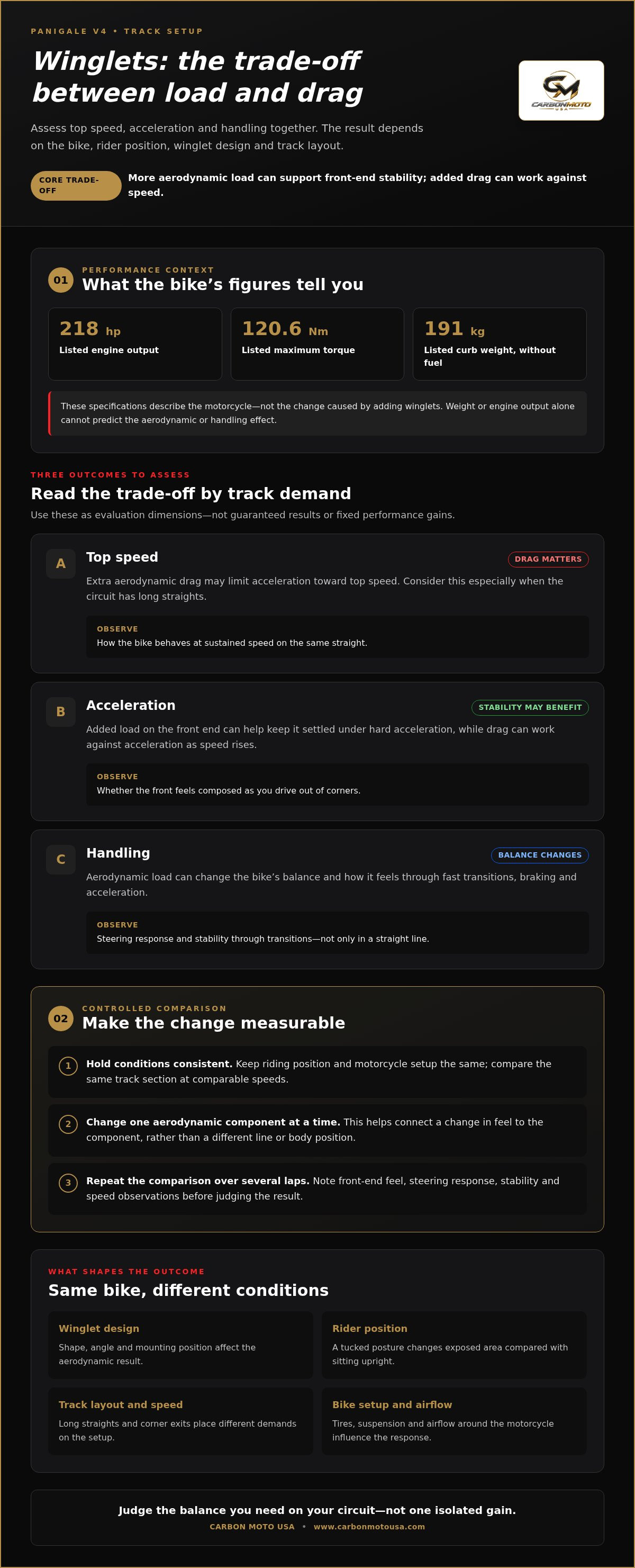
Winglets trade aerodynamic drag for added load on the front end. That trade-off can support stability under acceleration, while extra drag can work against maximum speed. The effect depends on speed, winglet design, rider position, and track layout. There’s no single outcome for every Panigale V4 setup.
The Panigale V4 is listed at 218 hp and 120.6 Nm of maximum torque. Those engine figures describe available output, not the speed or acceleration change from adding winglets. Aerodynamic resistance becomes more relevant as speed rises. On a long straight, added drag may limit acceleration toward the bike’s top speed, while downforce can help keep the front settled during hard acceleration.
Handling depends on how aerodynamic load changes the bike’s balance. Front-end stability may feel different during fast acceleration, braking, and transitions. The Panigale V4’s listed curb weight without fuel is 191 kg, but that figure alone can’t predict the effect. Rider posture, tires, suspension setup, and the winglets’ design all influence the response.
- Top speed: consider whether the track has long straights where aerodynamic drag matters.
- Acceleration: notice whether the front remains composed as you drive out of corners.
- Handling: assess steering response and stability through fast transitions, not just in a straight line.
Make a controlled comparison: keep your riding position and motorcycle setup consistent, then evaluate the same track section over repeated laps. Change one aerodynamic component at a time. That makes it easier to link a handling change to the component, rather than to a different line or body position.
For example, a setup that feels secure through a fast straight may feel less responsive in a sequence of direction changes. Record those differences alongside your speed and corner observations. Judge the result by the balance you need on your circuit, not by top speed alone. Aerodynamic improvements should complement the Panigale V4’s power and chassis behavior, rather than compromise either for one isolated gain.
How can I install or adjust Panigale V4 winglets and aerodynamic parts?
Start with the exact Panigale V4 model and the part’s installation instructions. Winglet shape, mounting points, and fastener requirements can differ between components. Don’t assume a part fits because it resembles the original. Compare its mounting layout with the motorcycle before beginning, and keep the instructions available throughout the work.
Prepare a clean, well-lit workspace and organize the parts before removing anything. Check each component for damage, then compare its holes and edges with the intended mounting area. For a carbon-fiber panel, inspect the surface and mounting points carefully. Don’t force the fit or enlarge an opening to make the component line up.
- Document the original setup. Photograph each winglet and panel from several angles. These images give you a clear reference for orientation and fit.
- Remove components in sequence. Follow the supplied instructions and retain the original fasteners together. Keep left- and right-side hardware separate if the parts differ.
- Test-fit before final assembly. Align the new part with its specified mounting points. Check for even contact and interference with nearby bodywork before securing it.
Use only the fasteners and tightening method specified for that component. Don’t substitute a torque value from another Panigale V4 part. Incorrect hardware or uneven tightening can stress a panel or prevent correct seating. If adjustment is built into the design, make only the changes described in its instructions.
After assembly, inspect both sides of the motorcycle. Confirm that the winglets sit evenly, the panels meet cleanly, and no part touches adjacent bodywork. Turn the handlebars through their full range of motion and check for interference. Review the installation instructions again before riding.
Change one component or setting at a time. A single change makes it easier to identify a fit issue or notice a difference in track behavior. Keep the original parts and your installation photographs, so you can compare the Panigale V4’s setup or restore its previous configuration later.
How do Panigale V4 aero modifications affect cooling, stability, and rider comfort
On a Panigale V4, bodywork shapes airflow around the radiator, engine, and rider. A panel that redirects air can affect how much reaches cooling openings or exits around the fairing. Keep those paths clear. A close-fitting component should align with the intended bodywork without covering an inlet or trapping debris against the radiator.
Stability also depends on how airflow loads the motorcycle at speed. Winglets affect aerodynamic load at the front, while fairing changes can alter the airflow reaching the rider and chassis. Crosswinds and shifts from a tucked position to sitting upright also change airflow. Assess stability on a familiar track section, noting whether the bike tracks consistently under acceleration and through fast transitions.
- Cooling: inspect radiator openings and surrounding panels after installing a fairing component.
- Stability: compare the same straight and corner sequence with a consistent riding position.
- Comfort: note helmet buffeting, shoulder pressure, and airflow around the cockpit.
Rider comfort affects how consistently you can maintain a track position. Persistent helmet buffeting, for example, can make it difficult to hold a tuck. Results vary between riders and helmets, so helmet choice is one practical variable to assess. In cold or wet conditions, a Pinlock visor and adjusted helmet vents can help manage airflow and fogging. These changes address the rider’s environment, not the motorcycle’s aerodynamic balance.
After a bodywork change, monitor the Panigale V4’s temperature display during normal track use. Check for blocked openings, loose panel edges, or contact between components. Make one change at a time, then record cooling behavior, stability, and comfort across comparable laps. That sequence helps separate an aerodynamic effect from a posture or weather change.
If you’re considering a bodywork update, explore Ducati Panigale V4 carbon fiber parts as one component option. Evaluate any new panel for fit and airflow clearance before track use, and keep rider comfort and cooling in the same assessment as stability.
Trying a different helmet is a practical first step for addressing buffeting, as riders report different results with different helmets across multiple motorcycles.
One rider said they sometimes tucked behind the screen to avoid heavy rain while riding on the road and had no visibility issues with screens on track.
Carbon Moto USA: BMW R 1300 GS Carbon Fiber
Carbon Moto USA offers BMW R 1300 GS Carbon Fiber for riders planning a carbon-fiber update for that adventure motorcycle. It’s a separate project from refining Panigale V4 aerodynamics, but the same disciplined approach applies: match components to the motorcycle and consider fit as part of the build.
For a different platform, the range also includes BMW R 1250 GS Carbon Fiber and Harley Davidson Pan America Carbon Fiber. Choose based on the bike you’re building, rather than treating components as interchangeable across models. The BMW R 1300 GS option is the relevant starting point for owners of that motorcycle seeking carbon-fiber parts.
If you’re planning a carbon-fiber build for a BMW R 1300 GS, contact Carbon Moto USA to discuss the parts.
Set a Clear Track Goal for Your Next Change
Deciding how to improve Panigale V4 aerodynamics starts with a precise track goal, not a parts list. Choose the behavior you want to address, such as confidence through a fast section or a more settled feeling under acceleration. That focus helps keep your build coherent and gives each change a purpose.
Before your next track day, write down the result you’re aiming for and how you’ll assess it. Make setup changes deliberately, allowing time to evaluate each one rather than changing several things at once. A well-planned build is easier to understand, refine, and enjoy over time.
For your next step, explore parts suited to your motorcycle and build direction. Contact Carbon Moto USA to discuss your project and move forward with a clear plan. Keep the process intentional, and make each change serve the ride you want.
Frequently Asked Questions
What changes improve Panigale V4 aerodynamics without replacing the fairings?
To learn how to improve Panigale V4 aerodynamics without replacing fairings, assess your helmet and riding posture first. A helmet that causes buffeting can disrupt a steady tuck, and riders report different results across helmet designs. Compare helmets in similar conditions, changing one variable at a time. If you’re deciding how to improve Panigale V4 aerodynamics for track comfort, prioritize a stable fit that lets you hold your position consistently.