Carbon Moto USA / Rider support
Do I Need a Steering Stabilizer on My Harley for More Stability

A steering stabilizer isn’t a required upgrade for every Harley. If you’re asking, “Do I need a steering stabilizer on my Harley?”, the practical answer is that it may help manage steering movement, but it won’t correct every cause of wobble. Start by assessing how the bike behaves and whether the front end, tires, or alignment may be contributing.
It’s understandable to want a component that makes the bike feel more composed, especially when the steering feels unsettled. But installing a stabilizer before identifying the cause can leave the underlying issue unresolved. A stabilizer is one part of a setup decision, not a universal fix.
This guide explains when a stabilizer may make sense, what to examine first, and how to weigh your Harley’s riding behavior against the condition of its front end. You’ll have a clearer basis for deciding whether to consider one or investigate the source of the instability.
Key Takeaways
- A steering stabilizer isn’t a necessary upgrade for every Harley. Decide based on how the bike behaves and what’s causing the unsettled steering.
- Before adding a component, consider potential sources of wobble, including front-fork condition and wheel alignment.
- A stabilizer may help manage steering movement, but it won’t address an underlying mechanical issue.
- If you’re also planning a BMW R 1300 GS build, explore Carbon Moto USA’s carbon fiber parts as a model-specific option.
Do I need a steering stabilizer on my Harley
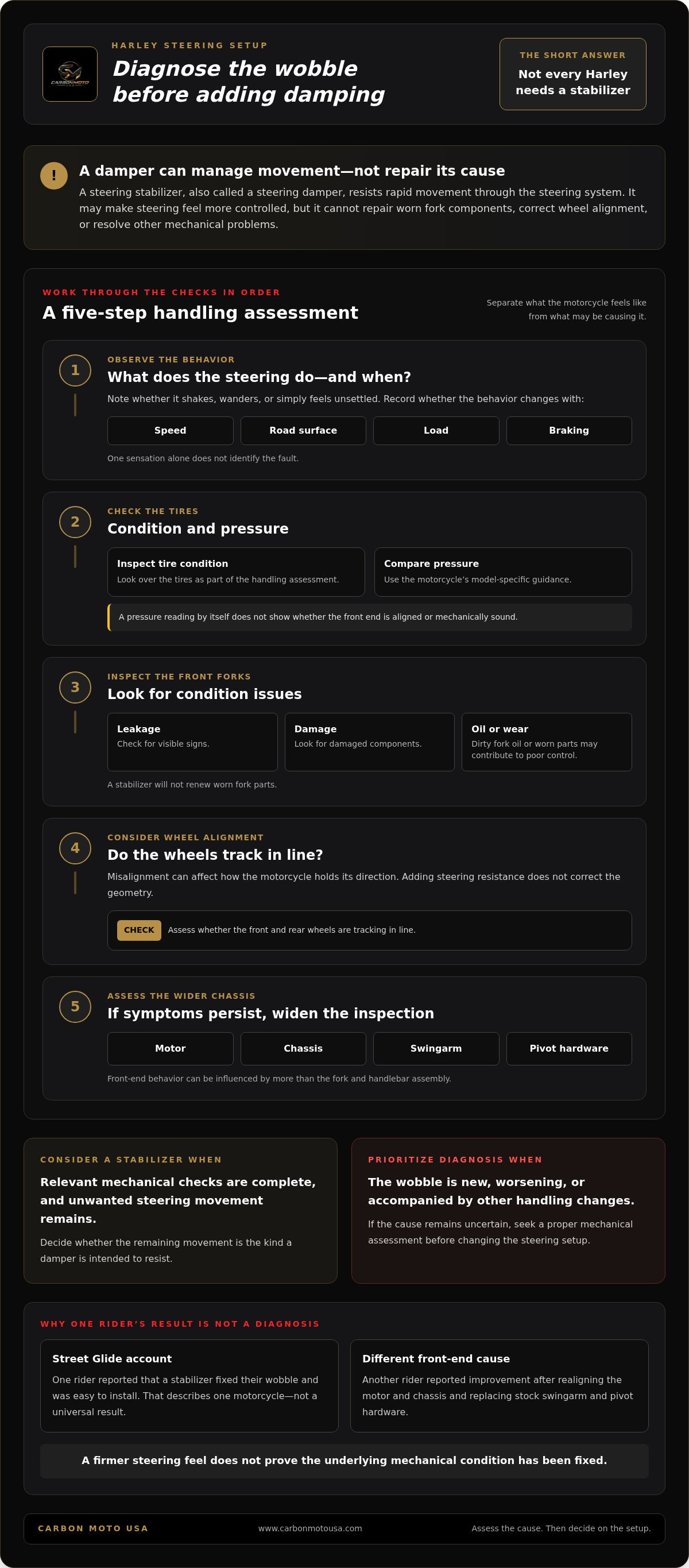
No. A steering stabilizer isn’t essential on every Harley. It may help control unwanted steering movement, but it doesn’t correct mechanical causes of wobble. Decide based on the bike’s behavior and condition, not on the assumption that every Harley needs the same upgrade.
A stabilizer, also called a steering damper, resists rapid movement through the steering system. This damping can make steering feel more controlled when the front end moves unexpectedly. It cannot repair worn fork components, correct wheel alignment, or resolve problems elsewhere in the chassis. If a Harley wobbles, identify the cause before treating the symptom.
Start with what you feel and when it happens. Note whether the steering shakes, wanders, or feels unsettled, and whether the behavior changes with speed, road surface, load, or braking. A single sensation doesn’t identify the fault. For example, a damper may make an FXDX Sport feel tighter without proving that it has cured the wobble.
Work through the main inspection points before deciding on a stabilizer:
- Tires and pressure: Inspect tire condition and compare pressure with the motorcycle’s model-specific guidance. A pressure reading alone doesn’t show whether the front end is aligned or mechanically sound.
- Fork condition: Look for signs of leakage or damage, and consider whether fork oil or worn front-fork components could be contributing to poor control. A stabilizer won’t renew those parts.
- Wheel alignment: Consider whether the front and rear wheels track in line. Misalignment can affect how the motorcycle holds its direction, so adding steering resistance won’t correct the geometry.
- Chassis and swingarm: Include the motor, chassis, swingarm, and pivot hardware in the assessment when symptoms persist. Front-end behavior can be influenced by more than the fork and handlebar assembly.
Use the sequence to distinguish a symptom from its source. First, record the riding conditions associated with the wobble. Next, inspect the tires, fork components, alignment, and chassis-related parts. Then decide whether the remaining steering movement is the kind of behavior a stabilizer is intended to damp. This is more precise than fitting a component because another rider reported a positive result.
Forum accounts illustrate why diagnosis matters. One Street Glide rider said a stabilizer fixed their wobble and was easy to install. That describes one motorcycle, not a universal result. Another rider’s front-end problems disappeared after realigning the motor and chassis and replacing stock swingarm and pivot hardware. These examples point to different possible causes, not one solution for every Harley.
Model design also matters. One FXDX Sport owner described a narrow-glide front end measuring 39 mm, but that detail alone doesn’t establish a need for a damper. Harley models differ in configuration, condition, and use. A touring bike that feels unsettled under changing loads presents a different assessment from a motorcycle with a damaged fork component or alignment concern.
So, do you need a steering stabilizer on your Harley? Consider one after assessing the bike’s condition and setup, if the remaining issue is unwanted steering movement. Prioritize diagnosis when the wobble is new, worsening, or accompanied by other handling changes. A stabilizer can alter steering feel, but it cannot replace sound tires, forks, alignment, and chassis components.
A forum participant also points to dirty fork oil or worn front-fork components as possible contributors to wobble. That possibility reinforces the need to assess the front end before relying on added steering resistance. A damper can change how movement feels, but that change alone doesn’t show whether the underlying condition has been identified. If the steering still feels unsettled, return to the inspection rather than treating a firmer feel as proof that the motorcycle is mechanically sound.
Read the FXDX Sport account with the same caution: its rider said the steering damper tightened up the motorcycle, but did not establish that it resolved the wobble. This describes how a part may affect feel, not evidence that it fixes every cause. Consider a stabilizer only after checking the motorcycle’s condition and identifying the movement you want it to control. If the cause remains uncertain, seek a proper mechanical assessment before changing the steering setup. The decision isn’t simply whether a damper can be fitted; it’s whether damping addresses the behavior that remains after relevant mechanical checks. Keep those questions separate, and judge the result by the bike’s behavior rather than by one rider’s report.
Carbon Moto USA: BMW R 1300 GS Carbon Fiber
Carbon Moto USA offers the Harley Davidson Road Glide Death Deleter Steering Stabilizer Kit and Harley-Davidson Street Glide Death Deleter Steering Stabilizer Kit for riders considering a stabilizer for those models. Choose the kit that corresponds to your Harley, then assess it as part of a setup decision, not as a substitute for diagnosing wobble or addressing mechanical problems.
The BMW R 1300 GS Carbon Fiber offering serves a different build goal: model-specific carbon fiber parts for a BMW adventure motorcycle. Carbon Moto USA also offers carbon fiber parts for the BMW R 1250 GS, Harley Davidson Pan America, and Ducati. These options are relevant when planning a model-focused parts upgrade, rather than seeking a steering stabilizer for a Road Glide or Street Glide.
For details about the relevant offering for your motorcycle, contact Carbon Moto USA.
Make Your Next Upgrade a Deliberate One
Let the motorcycle’s purpose guide your next move. A handling concern calls for a careful setup decision; a visual or material upgrade serves a different goal. Keeping those decisions distinct helps you choose components with clear intent and avoid treating one modification as a solution to an unrelated issue.
If you’re still weighing whether you need a steering stabilizer on your Harley, let the model and the specific riding concern shape your decision. For another build direction, Carbon Moto USA offers BMW R 1300 GS Carbon Fiber, BMW R 1250 GS Carbon Fiber, and Harley Davidson Pan America Carbon Fiber.
Take the next step at your own pace. Contact Carbon Moto USA to explore the available options for your motorcycle. A considered build starts with a clear purpose, and the right next choice can keep your project moving forward with confidence.